Fire damage in Vineland is rarely contained to where it started; heat, smoke, and water each spread on their own path through the structure. The response covers board-up, structural drying, soot and residue cleaning, and odor neutralization as a single sequenced job. Across area, multi-family buildings share air handling, so soot deposited in one unit shows up in another. We document the burn area, the smoke migration, and the water damage separately so the claim reflects all three. Talk to us at 551-237-7470 and the smoke cleanup is underway today.
Why The Burn Line Is Not The Damage Line
The damage that sets the claim size usually has little to do with the visible burn area. Different surfaces hold smoke differently — plaster, raw wood, tile, and glass each demand a different cleaning method.
We stabilize the opening, dry the suppression water before the framing can mold, and map the soot travel through the cavities and ductwork. We log the deodorization method and the surfaces treated so the odor work is provable rather than assumed.
How The Ducts Hold The Odor
Odor removal only holds when the source residue is physically removed before any sealing or treatment. We remove the source residue first, then use thermal fogging or hydroxyl treatment to neutralize what is bonded into porous materials.
The honest call on the HVAC is part of the scope, because guessing wrong reopens the odor complaint later. Done right, the odor is gone and stays gone — no returning smell once the masking would have faded.
The Hidden Water In Every Fire Loss — The Basics
The water used to extinguish a fire saturates framing, drywall, and contents that the flames never touched. A structure left wet after a fire compounds the damage, turning recoverable framing into material that has to come out.
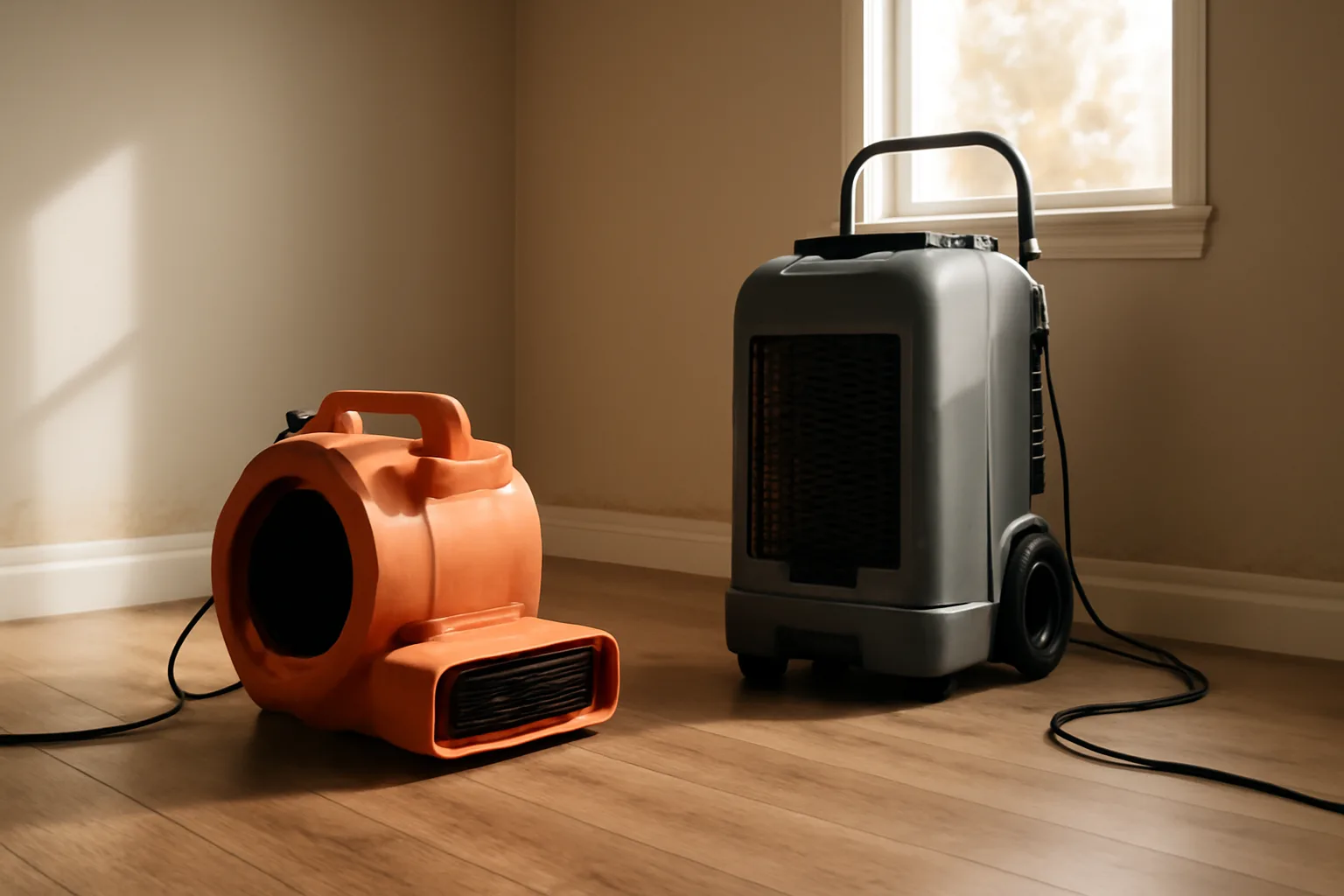
We dry by the numbers even on a fire loss, because a structure that reads wet is a structure that is still at risk. That is why our fire response opens with stabilization and extraction, not just soot and odor — the water cannot wait.
Putting out a house fire takes a great deal of water, and all of it ends up in the structure as a second loss. Handling the water early is what keeps a fire loss from turning into a second, avoidable mold claim weeks later. Drying and soot cleaning run together, sequenced so the wet framing is never left to sit while the surfaces get cleaned. Drenched framing in a cold-season loss starts growing mold fast, which is why we dry while we clean rather than after.
Why We Move Fast On Soot — What To Know
What the fire spared, the soot can still claim, because acidic residue keeps working on surfaces over the following days. Every day of delay moves more of the home from the cleanable column into the replace column.
We address the surfaces the smoke actually reached, not just the obvious ones, and we do it quickly. A quick soot response is the difference between salvaging surfaces and rebuilding them.
What the fire spared, the soot can still claim, because acidic residue keeps working on surfaces over the following days. Getting on the residue early is the cheapest version of fire cleanup, and the version that saves the most. We clean soot by surface type — wet method, dry method, abrasive — because what works on tile fails on raw wood. Every day of delay moves more of the home from the cleanable column into the replace column.
Why Pack-Out Protects The Claim — The Real Picture
What is inside the home — furniture, clothing, keepsakes — is part of the loss and part of the recovery. We photograph and catalog what can be saved and what cannot, so the contents claim is documented as clearly as the structure.
The contents inventory becomes part of the claim file, so the belongings are supported as fully as the structure. We return the cleaned contents once the structure is ready, closing the loss completely rather than partially.
What is inside the home — furniture, clothing, keepsakes — is part of the loss and part of the recovery. The same crew that restores the structure handles the contents, so the whole loss stays under one accountable roof. Photographs of every packed-out item back the contents portion of the scope, leaving no gaps for the carrier to question. Removing the contents also clears the structure for the soot, odor, and drying work without putting belongings at risk.
Beyond a single service line
A property loss in {city} rarely stays in one lane — fire damage restoration often overlaps with emergency water mitigation, severe weather recovery, air quality remediation, Category-3 water cleanup, post-loss reconstruction, and it is all handled under one contract, one number. We cover the same way across and everywhere else across area.
If you searched for restoration company near Vineland, When you reach out, a real person takes the call, and there is no runaround. Call 551-237-7470 any hour, read Why a Vineland Sewage Backup Is a Biohazard, Not a Cleanup on our blog, or head back to our Vineland home page to see everything we do.